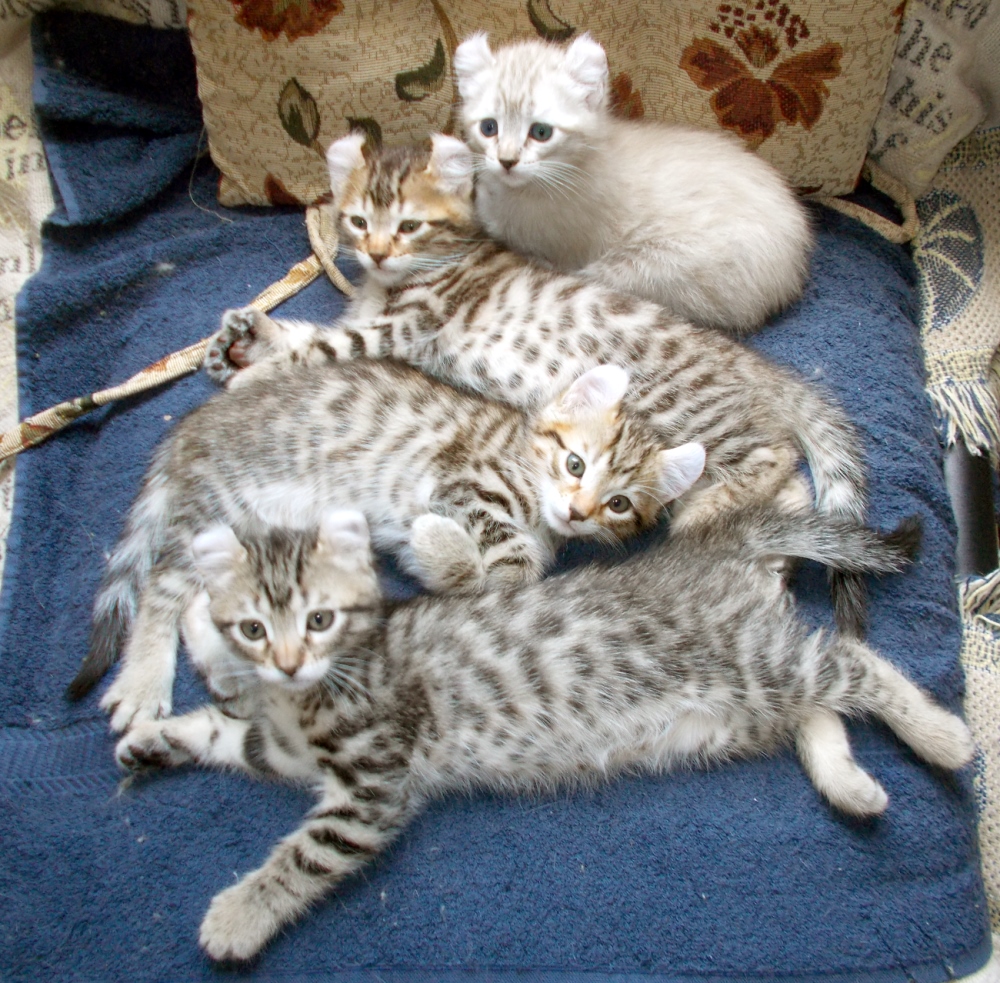
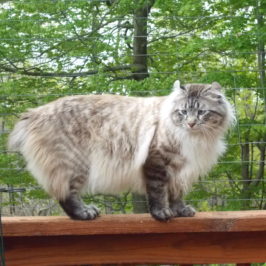
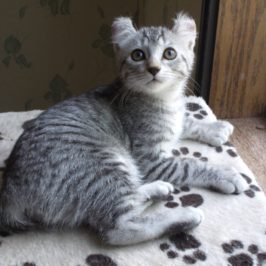
When you are preparing to add a new Highlander or Highland Lynx kitten to your family, you want to know that your investment is in a kitten that will be a healthy, happy companion for many years to come. Here are some key things to look for and important questions to ask when choosing a new kitten:
Visual Health Checks:
- Eyes: Bright, clear, and free of any discharge.
- Nose: Clean and free of discharge.
- Ears: Clean, free of dirt or wax buildup, and no signs of scratching or redness.
- Coat: Clean, shiny, and well-groomed. No signs of excessive scratching or fleas.
- Body: Well-proportioned, neither too thin nor too fat. Ribs shouldn’t be visible, but the kitten shouldn’t look potbellied either. There should be no signs of diarrhea on it’s behind or tail.
Behavior:
- Alert and Curious: A healthy kitten should be playful, inquisitive, and interested in its surroundings. A little shy is ok, but it should not be terrified of visitors or noises.
- Energy Level: Playful and energetic or even resting, but not lethargic or listless.
- Appetite: Should be interested in food and eating well but not acting ravenous or starved.
- Temperament: Observe how the kitten interacts with its siblings and with you. Ideally, it should be approachable and able to be picked up; not overly shy/scared or aggressive.
Background Information:
- Age: Most kittens are ready to leave their mother by 10-12 weeks old.
- Vaccinations: Ask about the kitten’s vaccination history. While many breeders and buyers do not give vaccines or subscribe to the common vaccine schedule, it is good to at least know what, if anything, your kitten has been given.
- Deworming: Inquire if the kitten has been dewormed. Chemical wormers can have side effects, like vaccines. If needed, you can use natural wormers if your kitten has not been wormed. You can provide probiotics for kittens who have already been wormed with chemicals.
- Overall Environment: The place where the kitten is being kept should be clean and free of overcrowding or signs of illness in other animals.
Additional Tips:
- Meet the Kitten’s Parents (if possible): If you’re getting a kitten from a breeder, ask to meet the mother and father. A healthy and friendly parent cat is a good sign and is often indicative of the personality and well-being of their offspring.
- Don’t be afraid to ask questions! A responsible breeder should be happy to provide you with all the information you need about the kitten’s health and background. If something seems off, trust your gut and look elsewhere.